

Authors: Paul Reynolds, Jeremy Rocha, Tyler Jones, and Christian Bailey
Titles: Professional Services Team
Organization: Karmak, Inc.
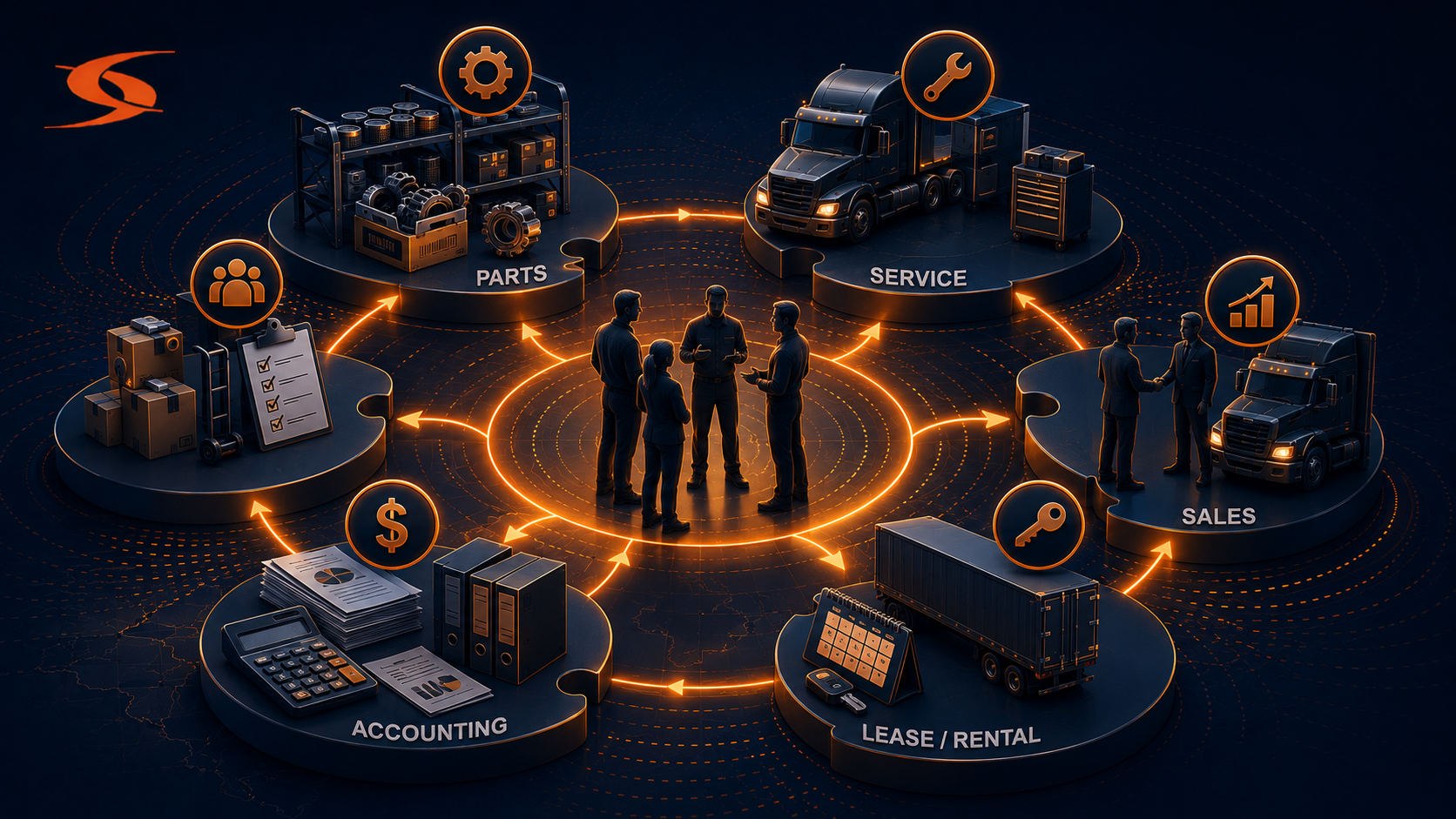
How well do your departments communicate with each other? Effective inter-department communication is essential for increasing efficiency and profitability in any heavy-duty business. Strong communication between teams fosters better coordination, streamlines processes, and helps achieve common goals. In this article, we outline key strategies for improving communication between Parts, Service, Accounting, Sales, and Lease/Rental departments.
1. Parts & Service – Keeping Technicians in the Bay
One of the most effective ways to improve service efficiency is by keeping technicians in their bays instead of walking back and forth to retrieve parts, tools, or approvals. Reducing unnecessary movement helps maximize billable hours, streamline workflow, and improve overall profitability. Here’s how your Parts and Service departments can collaborate to make this happen.
- Implementing an efficient parts requisition system allows technicians to request parts without leaving their bay. In the Fusion business system, tools like Bar Code Time Entry, the Karmak Mobile Service App, and the Decisiv integration enable quick part requests without needing to know the exact part number. This keeps techs focused on the repair and minimizes lost time.
- A structured workflow that keeps technicians in the bay ensures more time spent on actual repairs rather than unnecessary movement. Reducing interruptions allows technicians to maintain focus, complete jobs faster, and improve labor efficiency. By keeping techs in their work area, businesses can bill more labor hours and increase profits.
- Restricting access to parts inventory ensures better organization, less clutter, and reduced misplaced items. When fewer people handle parts, stock levels remain accurate, errors decrease, and inventory movement is easier to track. Keeping parts stored and delivered efficiently allows for a smoother, more reliable process between Parts and Service teams.
- Minimizing the number of steps a technician takes during their workday helps reduce physical strain and fatigue. Walking back and forth to retrieve parts or tools adds wear and tear on the body and increases the risk of injury. By keeping necessary resources close to the work area, technicians remain fresher and more productive throughout their shifts.
2. Parts & Accounting – Inventory Reconciliation
Reconciling inventory effectively requires collaboration, consistency, and strong processes between the Parts and Accounting departments. Maintaining a small variance between physical inventory and the General Ledger ensures financial accuracy, better forecasting, and reduced discrepancies.
Key Areas for Effective Reconciliation
- Inventory Integrity – Ensure part numbers, bin locations, stock classifications, and supplier records are accurate and consistently maintained.
- Matching Purchases & Returns to Vendor Invoices – Maintain posting references for both quantity and cost to ensure invoices align with actual purchases. Monitor outstanding returns to ensure credits are properly received.
- Controlling Local Purchases – Implement a miscellaneous purchase order process, ensuring that every part is logged in Fusion to improve tracking and prevent inventory loss.
- Auditing Account Postings & Processes – Regularly audit accounting setup and processes to identify errors, confirm compliance, and ensure all transactions are being recorded correctly.
- Managing Quantity & Cost Adjustments – Post quantity and cost adjustments to the General Ledger monthly to prevent year-end surprises.
- Monthly Reconciliation – Aim for monthly reconciliation rather than waiting until year-end. The industry benchmark is a 0.01% variance per month (1.2% annually).
Inventory Reconciliation – Best Practices: Implementing structured inventory reconciliation processes and regular cycle counts helps maintain accurate financial reporting and operational efficiency.
3. Accounting, Parts, Service, and Lease/Rental – Credit and Collections
Keeping accounts receivable aging clean is the responsibility of everyone in your business, not just the credit and collections department. Implementing the following strategies can help your business reduce uncollected cash and COD invoices, shorten the average days to pay, and lower the percentage of past-due receivables, ultimately improving overall financial efficiency.
- Maintaining accurate credit limits is essential for managing financial risk and ensuring smooth cash flow.
- Develop a clear process for approving credit and handling credit limit overrides, ensuring that these decisions are well-documented and consistent.
- Establish a reliable process for receiving payments on cash and COD invoices will help streamline collections.
Why it matters: Strong credit management reduces past-due receivables and improves cash flow.
4. Service, Sales, and Lease/Rental – Purchas Orders for Sales & Lease/Rental Units
To effectively manage repairs and maintenance costs on your lease/rental fleet, it’s important to standardize the following repair and maintenance practices to improve cost control, enhance efficiency, and create more predictable, manageable expenses.
- Develop a process that allows for the approval, tracking, and control of repair and maintenance expenses.
- Establishing predetermined labor rates and integrating them into your system is a crucial step in ensuring consistency and transparency
- The labor rate for internal repairs should be instituted, and parts lists for these repairs should be clearly defined. Creating quotes for approval for internal repairs and setting up specific labor codes in your system for these jobs will help streamline the process.
Why it matters: Standardizing maintenance practices improves efficiency and cost predictability.
5. Sales & Accounting – Unit Cost
Tracking unit costs on sales inventory is essential for maintaining accurate financial records, managing expenses, and ensuring profitability. Proper cost management helps businesses price units effectively, improve cash flow, and enhance financial reporting. Here’s how Sales and Accounting teams can work together to optimize unit cost tracking:
- Creating inventory records with costing information upfront provides visibility into expected unit arrivals and capital requirements. In Fusion, you can track your base cost and estimated arrival date to improve financial forecasting and operational planning. This proactive approach helps businesses forecast expenses and manage cash flow effectively.
- Local Purchase Orders are used for Sales Inventory and Lease/Rental to control cost allocations to the General Ledger. In Fusion, the “Is a Limit” feature allows businesses to set a budget limit for internal invoices, preventing overspending. Implementing this control ensures costs remain within approved financial parameters.
- Monitoring both internal and external invoices helps businesses track cost variations between quoted and final pricing. In Fusion, the Over/Under feature on LPOs allows users to quickly identify discrepancies, helping adjust future pricing expectations and maintain cost accuracy.
- The deal processing phase ensures that all inventory-related costs are properly recorded before finalizing a sale. In Fusion, inventory is cleared to Cost of Goods Sold (COGS) once the deal is processed, ensuring financial statements reflect accurate profit margins. Businesses should verify all costs and paperwork before completing a sale to prevent financial discrepancies.
- When after-sale repairs or goodwill adjustments are necessary, businesses should follow the Local Purchase Order process for proper tracking and cost control. In Fusion, user group permissions can be set to restrict who can authorize after-sale repair requests, ensuring accountability and preventing unnecessary expenses.
Key takeaway: Accurate cost tracking leads to better quoting and improved cash flow.
6. Lease/Rental and Service – Preventive Maintenance
Developing a proactive process for preventive maintenance is key to ensuring that your lease/rental fleet is well-maintained and operates efficiently. By using the right system to verify that regular maintenance is performed on all units, you can avoid unexpected breakdowns and costly repairs.
Key Takeaway: Reducing the need for expensive repairs and minimizing downtime allows units to remain operational and continue generating revenue. This proactive strategy will help you maintain the long-term reliability and profitability of your fleet.
The Benefits of Communicating
The benefits of effective communication between departments are vast and impactful. By fostering strong communication, standardizing processes, and using the right system, businesses can improve operational efficiencies and improve profitability. Clear communication helps reduce variances and increase accuracy in processes, leading to fewer errors and better outcomes. Additionally, it aids in cost reduction and ensures that units remain operational, minimizing downtime. Overall, promoting inter-department communication is a key factor in driving business success.
Need help unifying ALL the departments within your business? Contact your Karmak Representative or email ProfessionalServices@Karmak.com.
Karmak Solutions
See how Karmak helps commercial vehicle businesses streamline operations and work more efficiently.
Improve Operational ROI
Unify Sales, Service & Parts
Scale with Confidence
Related posts


Get ready to see your
business clearly.
No pressure. No commitment. Just a straightforward way to determine whether Karmak is the right fit for your operation.